Showing posts with label Names. Show all posts

Monday, 3 October 2016

October - the dirt month


We’ve come to October, which concludes my series of Finnish month names. I started it last year in November, the month of the dead, simply because I found that name intriguing... but ended up writing a short post about each month.

And now for October, or, in Finnish, lokakuu. ’Loka’ means mud or dirty, wet snow. The month has also been known as likakuu – ’lika’ means dirt. Where such a name comes from is rather obvious: it often rains in October, and everything is muddy and dirty. Or, if there is snow, it usually turns to grey slush. No snow here so far, but it’s still early October...


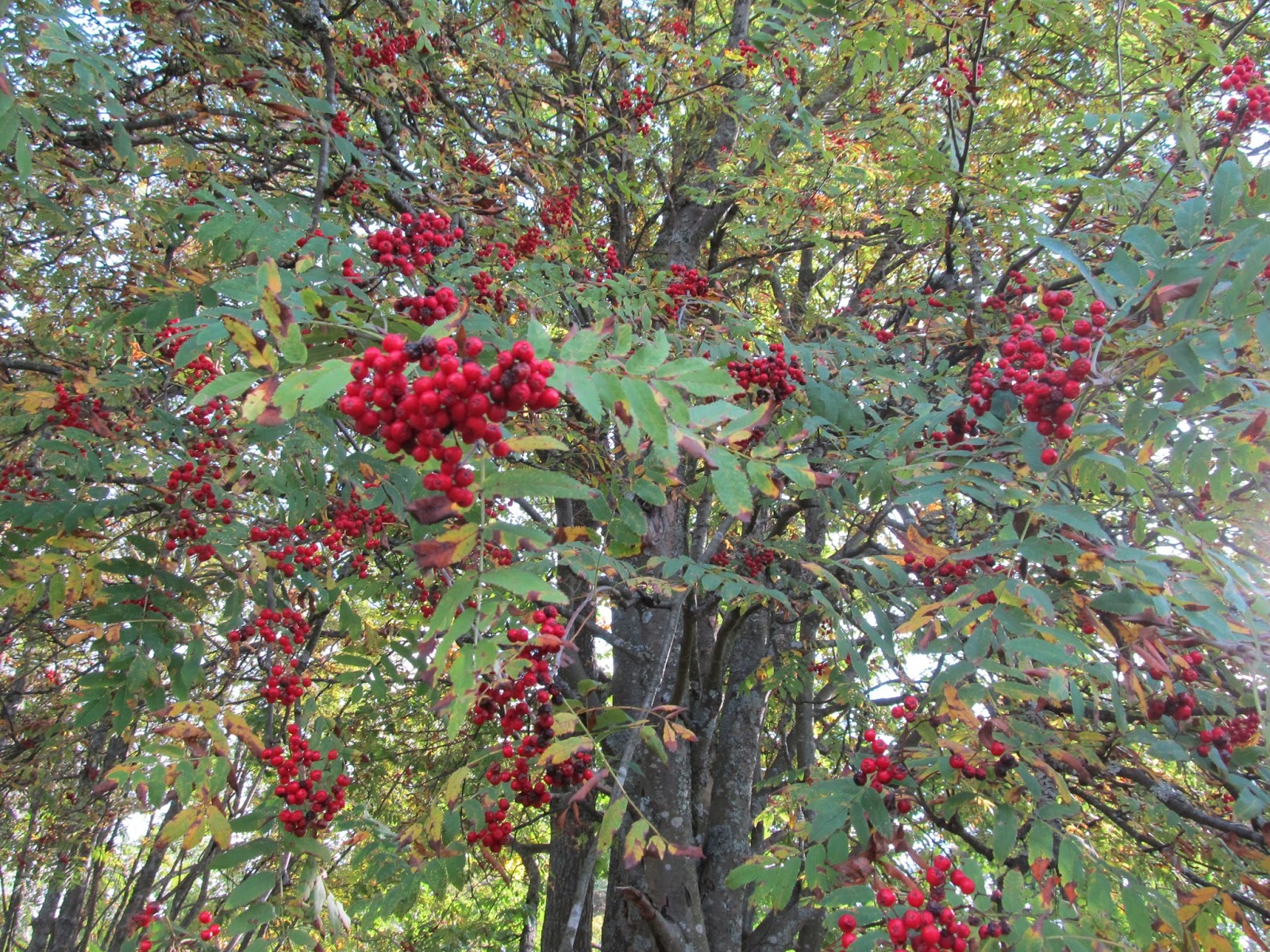
But I don’t really want to post pictures of mud and dirty, slushy snow, so here’s one from last weekend instead. ;)


Monday, 19 September 2016

September - Autumn month


September. Syyskuu. Syys or syksy means autumn. Quite simply, September is known as “autumn month” in Finland.

Autumn is my favourite season. Yes, I do love summer, mostly because it is warm (or rather, it’s not so horribly cold all the time!); because of the light and the life and the summer holidays and the general sense of freedom. In fact, I like all seasons, they all have their own allure and mysteries, but there’s just something magical about autumn. I love the soft, fading light, the gathering darkness. The vibrant colours of the falling leaves, the scent of apples (and baking apple pies!), the crisp, clear, quiet days... and even - or especially - those dark, dreary, rainy days. Perfect for curling up with a good book! ;)


Tuesday, 30 August 2016

August - the month of life (and rot)

It's already (still, just about) August, or, as we say in Finnish, elokuu.

This month has an interesting name, for, at the first glance, it looks like it means something like “the month of life”, for the Finnish word elo means life.

And while that is certainly true, it's also one of the month names with connections to farm work. Elonkorjuu means harvest. Or to be exact, korjuu alone means harvest and elo, which can also refer to harvest-ready grain, implies how important that harvest is: this is when one harvests the grain that will keep one fed and alive during the hard winter months.

Oddly enough, this month has also been called mätäkuu, 'rot month', and people sometimes still use this expression to refer to what in English is known as the dog days of summer. According to some theories, this term originates from either the Low German term Rodendage ('dog days') or the German Rodenmonat ('kaskeamiskuu' – 'slash-and-burn month') which was mistranslated into Danish as Råddenmåned, literally 'rot month', and the same term was later adopted into Finnish. But, as it happens, weather in late summer can be hot and humid and things tend to rot easily… so the term which was initially a mistake actually makes sense!

As I have failed to take photos of harvest fields, here's an August lake view instead:


Sunday, 31 July 2016

July - the month of haying

Phew, I just made it! It's the last day of July and as a lazy blogger (you know, summer, holidays, stuff...) I almost forgot my entire month name series.

July in Finnish is heinäkuu. Literally translated, that means hay month, or, indeed, haying month. Quite simply this is the month when farmers cut, dry and store grass. Thus July is another month that got its name from farm work.

I have no picture of hay fields, so instead here's one of my reading view lately:


Tuesday, 14 June 2016

June, the month of summer... or is it?

It’s already June, or, in Finnish, kesäkuu. Kesä, to most modern day Finns, means ’summer’. The month of summer? Makes sense, it being… well, summer and all. Right?

Well, it's not quite that simple (you knew I’d say that, didn’t you?). As it happens, the old(er) Finnish word, in some dialects at least, for summer is suvi, while kesä originally referred to something else, namely kesanto – fallow farmland, i.e. unseeded land. Apparently, June was a time when such fallow land was ploughed and thus this task gave its name to the entire month (and then the season), making it another month name that has its origins in farm work.

I don't happen to have a picture of such fallow land, so instead you'll get a photo of our front lawn and a June baby (well, no longer a baby) reading a book. :)

Monday, 16 May 2016

May - the month of sowing

We've come to May, or toukokuu.

This is another example of month names that refer to farm work done during a certain time of year. Touko is a familiar word to most modern day Finns in the connection of toukotyö. Työ means work, and toukotyö is farm work that is done in spring; ploughing, sowing etc.

Interestingly (I would say so, wouldn't I?), touko is generally considered to refer to the springtime work on the fields or the growing crops themselves; however, one source I happened to come across mentioned that it originates from an ancient Finno-Ugric word which means 'spring'. Incidentally, Touko is also a Finnish given name, although not a common one these days.

Since I don't happen to have an image of ploughed fields at hand, I picked a picture of some wood anemones instead. They blossom abundantly around our house right now.


Monday, 11 April 2016

April - the month to slash and burn

April is the cruellest month, breeding
Lilacs out of the dead land, mixing
Memory and desire, stirring
Dull roots with spring rain.
- T.S. Eliot

Often when I think about the word April, I hear the phrase “April is the cruellest month” in my head. I tend to agree. April can be cruel indeed, or at least ugly; usually not the time of lilacs yet up here in the North (this year, it snowed on the 3rd of April), it’s the time of harsh, merciless light; half-decayed trash revealed from under dirty, grey patches of snow... not my favourite season.

But the word April has nothing to do with the Finnish name for this spring month, huhtikuu. What does huhtikuu mean, then?

This is one of the month names where the importance of agriculture is evident; various months have been named after the work that used to, or, indeed, is done then. Huhti comes from the word huhta which means a field created by the old slash-and-burn technique. April was an ideal time to go and fell the trees that would later, once they dried, be burned to create a field – huhta. As fars as I understand, a huhta was a field that used to grow conifers while a kaski was a field from which birch and other deciduous trees had been felled.

Since I don't happen to have a picture of a slash-and-burn field, here's a photo of the first spring flowers! My daughter brought them for me last Wednesday. :)


Monday, 14 March 2016

March - the earth month

I can't believe it's March already! But it is, so let's look at the name maaliskuu - March in Finnish.

The word maalis actually comes from the word maa, which means "earth" or "ground". But why on earth (haha) would March be known as the earth month? The explanation is quite simple: in March, we may be able to witness the first signs of spring: snows begin to melt and small patches of earth are revealed between banks of snow. So here is yet another month name that is related to weather or a natural phenomenon.

There are, however, alternative explanations. According to one of them, maalis comes from the word mahla, "birch sap". People actually used to refer to one of the months as a mahlakuu, but as far as I know, it was May, not March... while in Estonian (a close relative of the Finnish language), mahlakuu used to be April. That makes sense, seeing that April is when people usually start to collect birch sap. Another theory links the word maalis with maali, "target" - according to this hypothesis, March was a good time to ski and shoot at targets.

Rather than go out with my bow and arrows, I just walked around and took this picture to go with the first explanation:


Monday, 22 February 2016

February - the month of pearls

We've reached February in my monthly "what's in a name" series.

February in Finnish is helmikuu, literally 'pearl moth'. But why? What does February have to do with pearls?

It's another month name that has its origins in a natural phenomenon or something related to the weather. In February, you can sometimes see tiny ice pearls decorating tree branches. This happens when the weather turns first warmer and the snow melts, then it gets colder again and the water dripping down from the branches freezes.

Unfortunately, I haven't been able to witness this phenomenon recently or take a picture of it. Right now, trees are covered in snow. Hence the clumsy imitation of the real thing. :D


Monday, 18 January 2016

January - the heart month


Following my recently established tradition ;) of looking at the Finnish names of the months, we move on to January.

Tammikuu. I suspect that when most modern day Finns hear the word tammi they think about a tree. Tammi is an oak. But why would January be called "oak month"?

According to one interpretation, January is the hardest time of the year (cold, dark etc.) and since oak is known to be hard, durable wood, people started to call January the oak month.

However, the word tammi does not only refer to an oak tree. It can also mean a center or a heart or a middle. January falls in the middle of winter, it is in the heart of the cold time, and thus, it is said, it became known as tammikuu. In fact, January has sometimes been referred to as sydänkuu, "heart month".

(The trees in the picture aren't oaks and it's not even a picture taken this winter but some years ago... but it is a fitting image for January, I think.)

Monday, 21 December 2015

December – the month of Yule


Last month I blogged about November’s Finnish name and thought, why not make it a monthly feature? Wrestling with words is what I do, and names are fascinating, so here goes...

The name of December in Finnish is joulukuu. It seems straightforward enough: joulu means 'Christmas' and the whole month has been named after that feast. The Finnish word joulu, in turn, comes from the Old Norse word jól – yes, the very same that gave Yule its name. So, in Finnish, this midwinter feast still retains its pagan roots even in its name (I could go on about various traditions, but that’s a topic for another time).

I said it seems straightforward enough, didn’t I? Which means it has to be more complicated than it seems. Well, December wasn’t always known as the month of Yule. Up until the 17th or 18th century, it was known as talvikuu, ’winter month’ (or ’winter moon’... I like the sound of that). That makes sense; December is usually when winter begins and it’s the time of Winter Solstice (talvipäivänseisaus in Finnish). However, as Yule gained more and more importance as a yearly holiday, the name of the month also changed. Considering that winter seems to arrive later each year - in fact, the weather we have now in Midwinter doesn't much differ from the weather of last Midsummer! - it seems that the name talvikuu would no longer even be very appropriate.


Monday, 9 November 2015

November (marraskuu) – the month of the dead


One of the interesting things about language (for a word wrestler, anyway) is the origin of words. I find these particularly fascinating when it comes to everyday words that we use without thinking about the origins of their meaning – or even unaware of it.

For example, the Finnish name for November, marraskuu. The name contains the word marras (kuu means ’moon’ or ’month’). Not many people these days know the meaning of the word, but it refers to death. Marras can actually mean various things from a dead body to a dying person, from a spirit to an omen of death, and it is of the same root as the English worda mortal and morbid.

The saying “maa makaa martaana”, the ground/earth lies dead, reveals what the word marras means in the name of November: it refers to nature’s death. I find it a very fitting and even a hauntingly beautiful, although a rather morbid, name.