Showing posts with label Wordsthoseslipperybastards. Show all posts

Saturday, 17 April 2021

Self-imposed isolation, day 34

Today’s lunch, which I made, my DH picked up, and we all ate together while having a video chat, was these wraps.


I made some with a pesto, cheese and tomato filling and some with cucumber, blue cheese flavoured cream cheese and turkey slice filling for DH and DD, and cucumber, same cheese and shrimp for me. When I packed them for my family, I put in little notes where I’d written the fillings (using the first letters of the Finnish words):


pe to juu

which, if you write it

Peto, juu means ”Beast, yeah”


and


tuo leik kur

which, if you write it

Tuo leikkur (the last word is dialect/spoken language though) means either ”Bring the cutter” or ”That cutter”.


I suppose I could (should?) claim that the isolation is finally getting to me, but I’m afraid this is something I would do anyway. 😄

Monday, 9 January 2017

Review: Children of Earth and Sky by Guy Gavriel Kay


It wasn't as if Seressa was sunny and warm in late autumn. Indeed, if he was being honest he'd have to say his city on its lagoon could be colder than Obravic. Fog and damp that could find your chest and bones, even in a palace on the Great Canal. There weren't enough fireplaces in the world, Orso Faleri was thinking, to entirely ease a wet autumn or winter night back home.
Even so, even so. You felt the cold more when you were away. Men were like that, the world was. An unfamiliar house among strangers, darkness having descended to the sound of rain. Poets wrote about such things.

So does Guy Gavriel Kay, who is also a poet (he has published a poetry book in addition to several novels).

I was first introduced to Kay's novels around 2000, when my boyfriend at the time gave me ”The Lions of Al-Rassan” to read. It was one of the first fantasy novels I ever read, but he knew what he was doing: I fell in love with the book, and Kay quickly became one of my favourite authors.

And the boyfriend? Reader, I married him. 😊

Kay’s books are classified as fantasy mostly because they are set in fictional worlds inspired by bygone cultures/eras/historical events. In ”Children”, the setting resembles the Renaissance Europe. Most of his books have an additional fantasy element, but that is usually something – a ghost, say, or an ability to communicate with a dead ancestor – that the mystic in me could easily believe to be possible (the sceptic in me might disagree), for We must not imagine we understand all there is to know about the world”.

But I've explained before what makes Kay's books perfect for me and why he is the only fantasy author whose work I still consistently follow, so I won't repeat that but will go on to the book, ”Children of Earth and Sky”, one of my holiday reads and one of the best books I read in 2016.

Since her baby brother was kidnapped, her father and older brother slain by Osmanli troops, Danica Gradek has lived for revenge. Although women rarely fight, the skilled archer joins a raiding party of legendary Senjan warriors.

Leonora Valeri, a disgraced daughter of a wealthy aristocrat, is given a chance to escape confinement in a religious house and take control of her life – if she agrees to a pretend marriage with a man she does not know... and becomes a spy.

Pero Villani, a young artist from the fabled city state Seressa is sent to paint a portrait of the Grand Khalif of the Osmanli Empire. There is an underlying mission, but succeeding in it would end not only the Khalif's life.

Marin Djivo, a merchant from Dubrava, is transporting cargo and passengers when pirates board his ship. Swords are drawn, arrows fired… and destinies irrevocably entangled.

As in all of Kay's books, empires rise and fall and armies march to war. Plots are hatched, power games are played, and few care about the costs.
Yet the outcome of everything could depend on whether it rains or not. (We are children of earth and sky, after all.)

I don’t want to say more about the plot for fear of spoilers, but as is typical of Kay's novels, events take place against upheavals that shape the world, yet the focus is always on individuals and their lives – and the changes they undergo. These passages illustrate the idea perfectly:

The world is a gameboard, an Esperañan poet had declared, in still celebrated lines, centuries ago. The pieces are moved, they do not control themselves. They are placed opposite each other, or beside. They are allies or enemies, of higher or lower rank. They die or they survive. One player wins and then there is another game on the board.
Even so, the rise and fall of fortune for empires, kingdoms, republics, warring faiths, men and women – their heartaches, losses, loves, undying rage, delight and wonder, pain and birth and death – all these are intensely real to them, not simply images in a poem, however brilliant the poet might have been.
The dead (with exceptions impossibly rare) are gone from us. They are buried with honour, burned, thrown into the sea, left on gibbets or in fields for animals and carrion birds. One needs to stand far away or look with a very cold eye, to see all this roiling movement, this suffering, agitation, as pieces only, moved in some game.

We are tossed around in the often violent current of history, but sometimes a single individual, and even a seemingly small deed (or a decision or a dream or a hunch), can change the course of history and impact the lives of many. I can’t put it into words, but there is something about this element that makes Kay’s books both larger than life yet so very human. Perhaps what I like so much is the comfort in the thought that we are all a part of something... yet very, very small parts. (And it’s all very random anyway.)

There are other familiar elements: beautiful friendships, love and loyalty, courage and honour, kindness and tenderness that sometimes emerge even in the most unexpected places. And, in the midst of all that turmoil, when empires come tumbling down and the world around us changes, these are what truly matter. ”Children” also includes references to Kay's earlier works, particularly ”The Sarantine Mosaic”. You don't need to read his other books in order to enjoy this one, but the references will likely delight the fans (they did me).

Then there is the language, beautiful as always. I've mentioned before that I am a fan of Kay's lyrical, dramatic style. I often find myself rereading a sentence or a paragraph just for the pleasure of it, to savour it.

While I would not rate this among Kay's best, it is still an excellent novel. I had some trouble immersing myself in the book the way I want to, even though it was the holidays and I had more time to read than usual. It may be that my concentration lagged a bit, because my daughter was ill and I had my own health concerns. It also seemed to me that it took some time for the story to get going – I had a feeling I had only just started the book when, in fact, I had already devoured more than half and would have expected there to be more rising tension by that point. There was action and adventure, certainly, but the pacing was perhaps somewhat unconventional. Even when I was half-way through the book, I would not have been able to describe the plot because I did not know how the story lines connected. On the other hand, this also meant that I (mostly) could not predict what would happen, and that I enjoyed very much.

I may have mentioned that I am an emotional reader – feelings are what I want, perhaps more than anything else, from a book. Lately, few books have managed to evoke strong feelings. (I have theories as to why, but I am not fond of them as they would indicate that I've become older and… I want to say wiser, naturally, but the more correct word here is perhaps more cynical, but I have sworn never to become that… so, less emotional? No, that isn’t any better! Let's say more balanced and experienced. Or maybe wiser is the right one, after all? Oh, words, those slippery bastards!)

Anyway. ”Children” did bring tears to my eyes. This happened a couple of times towards the end, which was expected, but also once long before that, quite unexpectedly (and therefore even more wonderfully). I sat there, all misty-eyed, and had to stop reading for a moment. And I thought – this is what I want from a book! This is why I love reading.

Monday, 3 October 2016

October - the dirt month


We’ve come to October, which concludes my series of Finnish month names. I started it last year in November, the month of the dead, simply because I found that name intriguing... but ended up writing a short post about each month.

And now for October, or, in Finnish, lokakuu. ’Loka’ means mud or dirty, wet snow. The month has also been known as likakuu – ’lika’ means dirt. Where such a name comes from is rather obvious: it often rains in October, and everything is muddy and dirty. Or, if there is snow, it usually turns to grey slush. No snow here so far, but it’s still early October...


But I don’t really want to post pictures of mud and dirty, slushy snow, so here’s one from last weekend instead. ;)


Monday, 19 September 2016

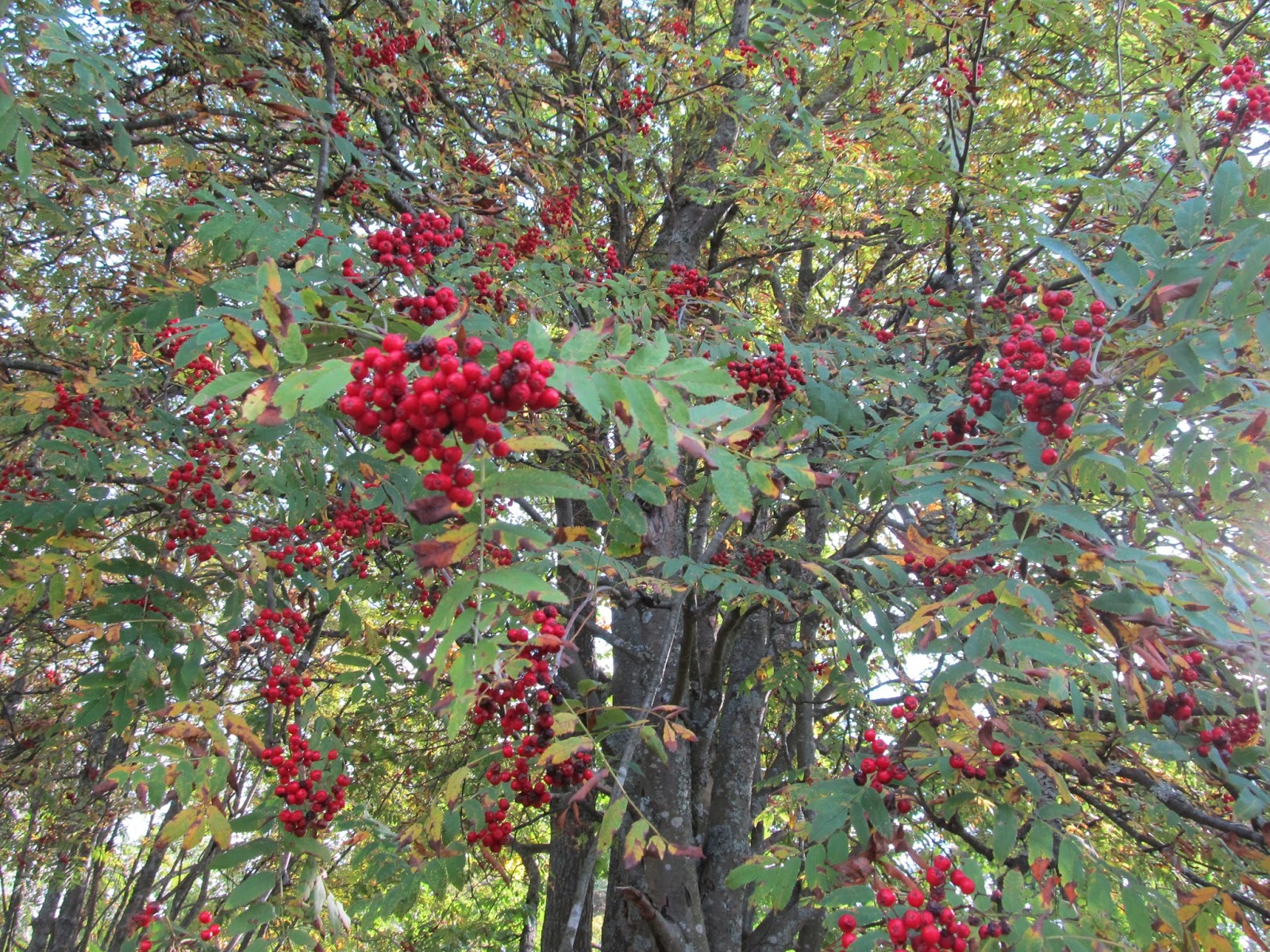
September - Autumn month


September. Syyskuu. Syys or syksy means autumn. Quite simply, September is known as “autumn month” in Finland.

Autumn is my favourite season. Yes, I do love summer, mostly because it is warm (or rather, it’s not so horribly cold all the time!); because of the light and the life and the summer holidays and the general sense of freedom. In fact, I like all seasons, they all have their own allure and mysteries, but there’s just something magical about autumn. I love the soft, fading light, the gathering darkness. The vibrant colours of the falling leaves, the scent of apples (and baking apple pies!), the crisp, clear, quiet days... and even - or especially - those dark, dreary, rainy days. Perfect for curling up with a good book! ;)


Tuesday, 30 August 2016

August - the month of life (and rot)

It's already (still, just about) August, or, as we say in Finnish, elokuu.

This month has an interesting name, for, at the first glance, it looks like it means something like “the month of life”, for the Finnish word elo means life.

And while that is certainly true, it's also one of the month names with connections to farm work. Elonkorjuu means harvest. Or to be exact, korjuu alone means harvest and elo, which can also refer to harvest-ready grain, implies how important that harvest is: this is when one harvests the grain that will keep one fed and alive during the hard winter months.

Oddly enough, this month has also been called mätäkuu, 'rot month', and people sometimes still use this expression to refer to what in English is known as the dog days of summer. According to some theories, this term originates from either the Low German term Rodendage ('dog days') or the German Rodenmonat ('kaskeamiskuu' – 'slash-and-burn month') which was mistranslated into Danish as Råddenmåned, literally 'rot month', and the same term was later adopted into Finnish. But, as it happens, weather in late summer can be hot and humid and things tend to rot easily… so the term which was initially a mistake actually makes sense!

As I have failed to take photos of harvest fields, here's an August lake view instead:


Sunday, 31 July 2016

July - the month of haying

Phew, I just made it! It's the last day of July and as a lazy blogger (you know, summer, holidays, stuff...) I almost forgot my entire month name series.

July in Finnish is heinäkuu. Literally translated, that means hay month, or, indeed, haying month. Quite simply this is the month when farmers cut, dry and store grass. Thus July is another month that got its name from farm work.

I have no picture of hay fields, so instead here's one of my reading view lately:


Tuesday, 14 June 2016

June, the month of summer... or is it?

It’s already June, or, in Finnish, kesäkuu. Kesä, to most modern day Finns, means ’summer’. The month of summer? Makes sense, it being… well, summer and all. Right?

Well, it's not quite that simple (you knew I’d say that, didn’t you?). As it happens, the old(er) Finnish word, in some dialects at least, for summer is suvi, while kesä originally referred to something else, namely kesanto – fallow farmland, i.e. unseeded land. Apparently, June was a time when such fallow land was ploughed and thus this task gave its name to the entire month (and then the season), making it another month name that has its origins in farm work.

I don't happen to have a picture of such fallow land, so instead you'll get a photo of our front lawn and a June baby (well, no longer a baby) reading a book. :)

Monday, 16 May 2016

May - the month of sowing

We've come to May, or toukokuu.

This is another example of month names that refer to farm work done during a certain time of year. Touko is a familiar word to most modern day Finns in the connection of toukotyö. Työ means work, and toukotyö is farm work that is done in spring; ploughing, sowing etc.

Interestingly (I would say so, wouldn't I?), touko is generally considered to refer to the springtime work on the fields or the growing crops themselves; however, one source I happened to come across mentioned that it originates from an ancient Finno-Ugric word which means 'spring'. Incidentally, Touko is also a Finnish given name, although not a common one these days.

Since I don't happen to have an image of ploughed fields at hand, I picked a picture of some wood anemones instead. They blossom abundantly around our house right now.


Monday, 11 April 2016

April - the month to slash and burn

April is the cruellest month, breeding
Lilacs out of the dead land, mixing
Memory and desire, stirring
Dull roots with spring rain.
- T.S. Eliot

Often when I think about the word April, I hear the phrase “April is the cruellest month” in my head. I tend to agree. April can be cruel indeed, or at least ugly; usually not the time of lilacs yet up here in the North (this year, it snowed on the 3rd of April), it’s the time of harsh, merciless light; half-decayed trash revealed from under dirty, grey patches of snow... not my favourite season.

But the word April has nothing to do with the Finnish name for this spring month, huhtikuu. What does huhtikuu mean, then?

This is one of the month names where the importance of agriculture is evident; various months have been named after the work that used to, or, indeed, is done then. Huhti comes from the word huhta which means a field created by the old slash-and-burn technique. April was an ideal time to go and fell the trees that would later, once they dried, be burned to create a field – huhta. As fars as I understand, a huhta was a field that used to grow conifers while a kaski was a field from which birch and other deciduous trees had been felled.

Since I don't happen to have a picture of a slash-and-burn field, here's a photo of the first spring flowers! My daughter brought them for me last Wednesday. :)


Thursday, 7 April 2016

Words... where did they go?

Today, words seem particularly slippery... I think I'm battling the onset of a cold which makes my head kind of woolly and my thoughts sluggish, but I happen to have a new translation task that demands some word-wrestling action. So, this is just a short update with a picture of my "view" today:


The lovely mug was a birthday present from a dear friend - alas, it doesn't contain hot chocolate at the moment but ginger tea! And my daughter made the coaster for me for Mother's Day last year; I think you're supposed to use it under hot pots and pans in the kitchen, but I like to keep it on my desk. :)

Monday, 14 March 2016

March - the earth month

I can't believe it's March already! But it is, so let's look at the name maaliskuu - March in Finnish.

The word maalis actually comes from the word maa, which means "earth" or "ground". But why on earth (haha) would March be known as the earth month? The explanation is quite simple: in March, we may be able to witness the first signs of spring: snows begin to melt and small patches of earth are revealed between banks of snow. So here is yet another month name that is related to weather or a natural phenomenon.

There are, however, alternative explanations. According to one of them, maalis comes from the word mahla, "birch sap". People actually used to refer to one of the months as a mahlakuu, but as far as I know, it was May, not March... while in Estonian (a close relative of the Finnish language), mahlakuu used to be April. That makes sense, seeing that April is when people usually start to collect birch sap. Another theory links the word maalis with maali, "target" - according to this hypothesis, March was a good time to ski and shoot at targets.

Rather than go out with my bow and arrows, I just walked around and took this picture to go with the first explanation:


Monday, 22 February 2016

February - the month of pearls

We've reached February in my monthly "what's in a name" series.

February in Finnish is helmikuu, literally 'pearl moth'. But why? What does February have to do with pearls?

It's another month name that has its origins in a natural phenomenon or something related to the weather. In February, you can sometimes see tiny ice pearls decorating tree branches. This happens when the weather turns first warmer and the snow melts, then it gets colder again and the water dripping down from the branches freezes.

Unfortunately, I haven't been able to witness this phenomenon recently or take a picture of it. Right now, trees are covered in snow. Hence the clumsy imitation of the real thing. :D


Monday, 18 January 2016

January - the heart month


Following my recently established tradition ;) of looking at the Finnish names of the months, we move on to January.

Tammikuu. I suspect that when most modern day Finns hear the word tammi they think about a tree. Tammi is an oak. But why would January be called "oak month"?

According to one interpretation, January is the hardest time of the year (cold, dark etc.) and since oak is known to be hard, durable wood, people started to call January the oak month.

However, the word tammi does not only refer to an oak tree. It can also mean a center or a heart or a middle. January falls in the middle of winter, it is in the heart of the cold time, and thus, it is said, it became known as tammikuu. In fact, January has sometimes been referred to as sydänkuu, "heart month".

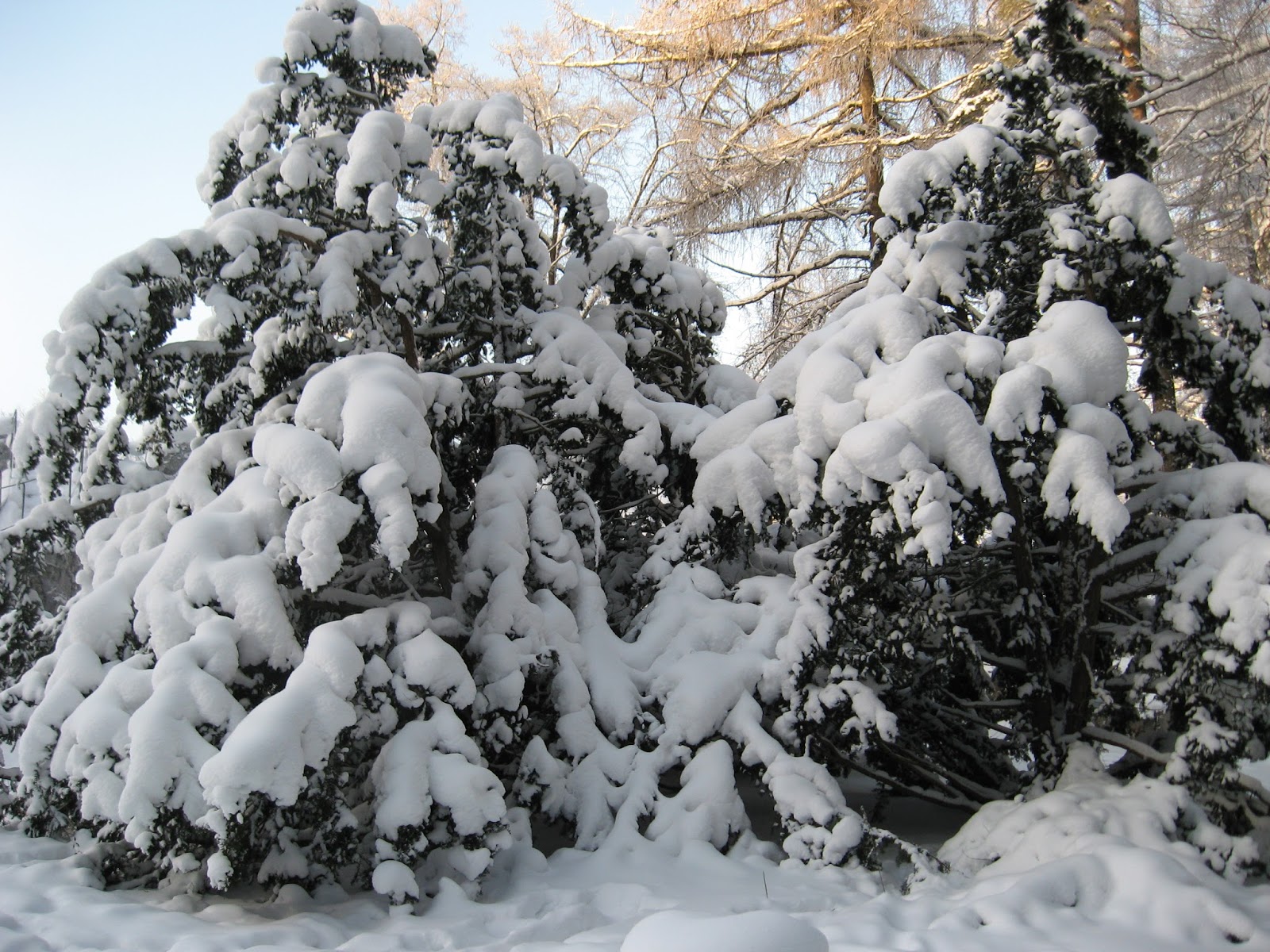
(The trees in the picture aren't oaks and it's not even a picture taken this winter but some years ago... but it is a fitting image for January, I think.)

Monday, 21 December 2015

December – the month of Yule


Last month I blogged about November’s Finnish name and thought, why not make it a monthly feature? Wrestling with words is what I do, and names are fascinating, so here goes...

The name of December in Finnish is joulukuu. It seems straightforward enough: joulu means 'Christmas' and the whole month has been named after that feast. The Finnish word joulu, in turn, comes from the Old Norse word jól – yes, the very same that gave Yule its name. So, in Finnish, this midwinter feast still retains its pagan roots even in its name (I could go on about various traditions, but that’s a topic for another time).

I said it seems straightforward enough, didn’t I? Which means it has to be more complicated than it seems. Well, December wasn’t always known as the month of Yule. Up until the 17th or 18th century, it was known as talvikuu, ’winter month’ (or ’winter moon’... I like the sound of that). That makes sense; December is usually when winter begins and it’s the time of Winter Solstice (talvipäivänseisaus in Finnish). However, as Yule gained more and more importance as a yearly holiday, the name of the month also changed. Considering that winter seems to arrive later each year - in fact, the weather we have now in Midwinter doesn't much differ from the weather of last Midsummer! - it seems that the name talvikuu would no longer even be very appropriate.


Monday, 9 November 2015

November (marraskuu) – the month of the dead


One of the interesting things about language (for a word wrestler, anyway) is the origin of words. I find these particularly fascinating when it comes to everyday words that we use without thinking about the origins of their meaning – or even unaware of it.

For example, the Finnish name for November, marraskuu. The name contains the word marras (kuu means ’moon’ or ’month’). Not many people these days know the meaning of the word, but it refers to death. Marras can actually mean various things from a dead body to a dying person, from a spirit to an omen of death, and it is of the same root as the English worda mortal and morbid.

The saying “maa makaa martaana”, the ground/earth lies dead, reveals what the word marras means in the name of November: it refers to nature’s death. I find it a very fitting and even a hauntingly beautiful, although a rather morbid, name.


Wednesday, 13 May 2015

My life in book titles


Here's a game for all book lovers! I received this little challenge from a friend a while back, and while I posted my answers in Facebook then, I decided to share it here as well. When my friends joined the game, I enjoyed reading their answers - so, if you're up to it, you're very welcome to post your answers in the comments.

And this is how it works:

Answer the following questions using titles of books you have on your bookshelf (or your Kindle or whatever):

1. Are you a man or a woman? Sword woman

2. Describe yourself: Daughter of the forest

3. What does life mean to you? A thread of grace

4. How do you feel? A feast for crows :P

5. Where do you live? Far from the madding crowd

6. Where would you like to travel? Wuthering heights

7. Describe your best friend: Wolf of the plains

8. What's your favourite colour? The crimson petal and the white

9. What's the weather like? The mists of Avalon

10. Your favourite time of day? The last light of the sun

11. If your life was a TV show, what would it be called? Written in my own heart's blood

12. Describe your current relationship: The mirror of her dreams

13. What do you fear? Come Armageddon

14. Today's motto: Through the stones

15. Give some advice: Speak easy

16. How would you want to die? Swordspoint

Tuesday, 14 April 2015

Reading is good for you

Since this has something to do with two topics of this blog, namely books/reading and translations (or just wrestling with words in general), I'm going to recommend this article from Bookriot, titled "Reading more translated books will make you a better person". It's an interesting text, and I suppose what is said about reading translations also goes for reading books in the language they were originally written when it's not your first language.

It also reminded me of one of my reading quirks, the drive to read outside your favourite genres and/or about times, topics, locations etc. you don't know much about. This not only increases your knowledge and understanding about these topics, but might also make you more tolerant and compassionate. So, clearly, reading is good for you. :)

Thursday, 29 January 2015

Words.


I found this image on The Reading Room's Facebook page. I liked it so much I decided to post it here. It makes me think of not only those authors who have a way with words, who can make us laugh and cry, but also words as we use them every day - how a carelessly thrown word can cause much damage, how a few words of encouragement can brighten someone's day.

Wednesday, 21 January 2015

Translation links

I haven't talked much about translation here, although that is what originally made me think of the title for this blog (in short, I had a translation task, and thought about it as “wrestling with words” - and then realised the phrase applies to many other situations in my life just as well).

But I'm not going to talk about translation now, either (disappointed? Yeah, right... ;) ). I'm just going to share a couple of interesting links. Don't worry, they're not exactly useful, more like weird and funny.

The 25 Most Hilarious Translation Fails Of All Time. Okay, it's not nice to make fun of others, but some of these really are hilarious (or maybe it's just my weird sense of humour :P).


This from the site mentioned above.


30 Untranslatable Words. This list could be endless, but some of these are lovely.

And Idioms of the World. This is why idioms can't always be directly translated!

Thursday, 30 October 2014

Sex, drugs and... words?

No, I did not come up with that title in hopes of attracting attention. No, those are not three of my favourite things... except if you think of chocolate as a drug and, well, books are made of words... so they actually are three of my favourite things!

I came across this article, which, referring to this study, suggests that learning new words activates not only the language areas in our brain but also the same reward areas as do “pleasurable activities”, such as, say, sex or eating chocolate. The conclusions seem to be rather preliminary yet, but it is an interesting idea. We might learn languages because we enjoy it! Emotions might play a significant role in language acquisition and in our motivation to learn languages, whether we're talking about people learning a foreign language or of children learning their first language.

Someone has been playing with words
The researches measured the brain activity while the participants completed two tasks: gambling and learning a new word by inferring its meaning from context. Earning money while gambling and learning a new word by inference produced the same brain activity. This makes me wonder – would learning a word from a dictionary or from a vocabulary list be equally pleasurable or is the process of inferring a word from context (the aha! moment; the epiphany) needed to produce the increase in brain activity? If it is indeed inference that causes the “pleasure” of learning a new word, it would certainly suggest that this method of vocabulary learning would be superior to most other methods (such as memorising vocabulary lists).

However, I'm afraid more proof is needed before I replace my nightly chocolate fix with language classes... ;)