Showing posts with label Macbeth. Show all posts

Wednesday, 7 June 2017

Review: Lady Macbeth by Susan Fraser King


I’d had my eye on this book for quite some time, and now I finally purchased it. I was going to save it for later (seemed ideal for those lovely, dark, stormy autumn nights) but then I just could not resist.

Not that the Finnish summer so far much differs from those cold autumn nights, with the temperatures at "+7 degrees C, feels like +3" and hail storms several times a day. I wore my winter boots and winter coat when I ventured out of the house, yet somehow managed to pick up a cold somewhere. 😔(And now it's nice and warm outside. Of course.)

But now, back to the book! I couldn't wait to start it, because, well, it’s Macbeth… even better; it’s Lady Macbeth! It’s Scotland. It’s the 11th century. (There are Vikings, too.) I have previously read another novel about Lady Macbeth, titled “Lady Macbeth’s Tale”. You can read my review here.

I must point out that the castle on the cover of the novel looks a lot like Eilean Donan castle near Inverness, a castle I visited on a holiday with my husband over ten years ago now. I really want to go back to Scotland!


But that doesn't seem likely, so I'll take the next best thing: books.

Macbeth is famous thanks to the tragedy by Shakespeare, but what the bard did was he used the actual events for inspiration without bothering much with historical accuracy. It does make a great story, but in it, Lady Macbeth appears as an ambitious, ruthless woman who drives her husband to commit regicide in order to seize the crown.

Was she really like that? Unfortunately, we will never know, but Susan Fraser King has put together an account of Lady Macbeth’s life from what precious little is known about her and her (in)famous husband. Recent research has revealed some new information (again, I very much enjoyed the Author’s Note at the end of the book, always interesting), yet much remains unknown. But that is historical fiction: taking some few facts, using fiction to bridge the gaps and weave a plausible and – at its best – spellbinding story.

Lady Gruadh is of royal blood, which makes her a coveted prize among men vying for the throne of Scotland. Though she is kidnapped as a child, later married off against her wishes; though her husband is slain and his ambitious killer promptly marries her to strengthen his claim to the throne, she maintains her own will, at least as far as possible in her circumstances.

Thanks to the old Celtic tradition of women wielding weapons, Gruadh is allowed to train with a sword and even fight battles. She is not the ambitious schemer Shakespeare portrays but a much more complicated character with conflicting motives. Her strength is not only in her will and ability to protect those she loves, her people and her land and its ancient customs; it is in how she endures and survives the hardships and tragedy that life has in store for her.

The story spans decades and blends historical fact with a bit of Celtic myths and magic. The feel of the period is real, the details meticulous. The book took me to the mist-shrouded highlands and the halls of ancient kings, and I thoroughly enjoyed the journey. The language was beautiful, although it seemed to weaken a little after a stunning start.

My only complaint is that I did not really feel connected to the characters; they remained a little distant - Macbeth, who could have been a truly intriguing character, especially so.

All in all, this was a fascinating read which made me want to know more about Macbeth, Lady Gruadh and their time.

Wednesday, 13 July 2016

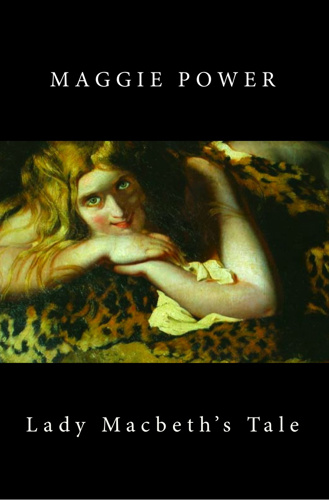
Review: Lady Macbeth’s Tale by Maggie Power


I came across this novel when Amazon offered it for free, and I didn’t have to think twice before I downloaded it. It’s Macbeth! No, better; it’s Lady Macbeth! It’s Scotland. It’s the 11th century. What more can I want?

Most of us know Macbeth from the famous tragedy by Shakespeare, but, as far as I understand, Shakespeare more or less simply used the actual events for inspiration rather than bothering with historical accuracy. In his play, Lady Macbeth appears as an ambitious, ruthless woman who drives her husband to commit regicide in order to seize the crown. In Maggie Power’s tale, Lady Macbeth is given a chance to tell her own story: what happened to her before she became Lady Macbeth, what made her the kind of woman she is.

Gwaina, a princess of Cornwall, finds herself a pawn in the power struggles of the 11th century. To quote her:
For my life… my death… are being cast like rune stones across the brutal landscape of territorial treaties, royal alliances and canny blood-ties with grasping Northmen. Already I'm learning that once beyond the walls of childhood, having overleapt the moat of maidenhead, a woman may count of everything and nothing.

She is a princess; kings and princes vie for her hand, yet she wants to rule as a queen in her own right. Men continuously tell her to leave politics to men:
Leave affairs of state to men. We are your masters.

And eventually men fail her, which leads to a bitter disappointment.

“Lady Macbeth’s Tale” is Gwaina’s story from childhood to becoming Lady Macbeth. That is, we do not get to see the events described by Shakespeare in his play. There are references to that, though, including the origin of the three witches. The first, longer part of the story is told by Gwaina, then the point of view changes to that of Macbeth. It is an interesting choice. On one hand, it emphasises the change in Gwaina (later Gruoch) – after what she’s been through, she’s hardly the same person – but on the other hand, it distances the reader from her. Even so, it becomes clear where her ambition and ruthlessness stem from.

My feelings about this book are conflicted. It held my interest and I wanted to know what happened, yet I felt like the plot didn’t ever really get going. Perhaps too much was covered through dialogue (most often between Gwaina and her lover(s)) instead of actually showing us what happened. There were characters who conveniently appeared to help the protagonist in trouble and were never seen again later, and there were scenes that served no purpose in furthering the plot. I could also complain about the sex scenes, many of which did not take the story forwards, but... me? Complain about sex scenes? Not likely, unless they’re terrible, so... no. ;)

I liked the writing, and if you’ve been following my posts, you know this is important to me. There were instances where it veered dangerously close to purple prose, but for the most part, I enjoyed the style, the beautiful sentences, and particularly a certain animistic aspect in the style. Wonderful, and very fitting!

I won’t go into historical accuracy in any detail since I’m no expert and don’t know how Power created her story (I would have appreciated an “Author’s Note” with references to sources, to which parts were based on research and how much was the author’s imagination, but there was none). Most of it seemed right, although there were a few strange details, including the use of the term rapier (rapiers did not exist in the 11th century... but then it was only once and even then symbolically) and Gwaina being rescued from her kidnappers by nuns in black silk attires, firing poison arrows at her enemies. I don’t know how likely such a turn of events would have been – sounds more like fantasy than historical fiction, although an order of such ninja nuns would be undeniably cool!

I found it impossible to rate this book. There was definitely a lot of promise, but I was left with a feeling that the somewhat incoherent and loose plot did not quite allow that potential to truly flourish.